Mobile apps used to do one job and do it well a video player played video, a music app played music, a notes app held text. That era is fading fast. Today’s users want to watch, listen, read, and interact without bouncing between five different apps to do it. That demand has given rise to Application Mobile DualMedia, a new generation of mobile apps built to handle multiple media formats inside one unified, synchronized experience.
In this guide, we’ll break down what DualMedia apps actually are, how they work under the hood, the features that define them, where they’re already being used, and what challenges developers still need to solve. By the end, you’ll understand why multi-format media integration is quickly becoming a baseline expectation rather than a nice-to-have.
What Is Application Mobile DualMedia?
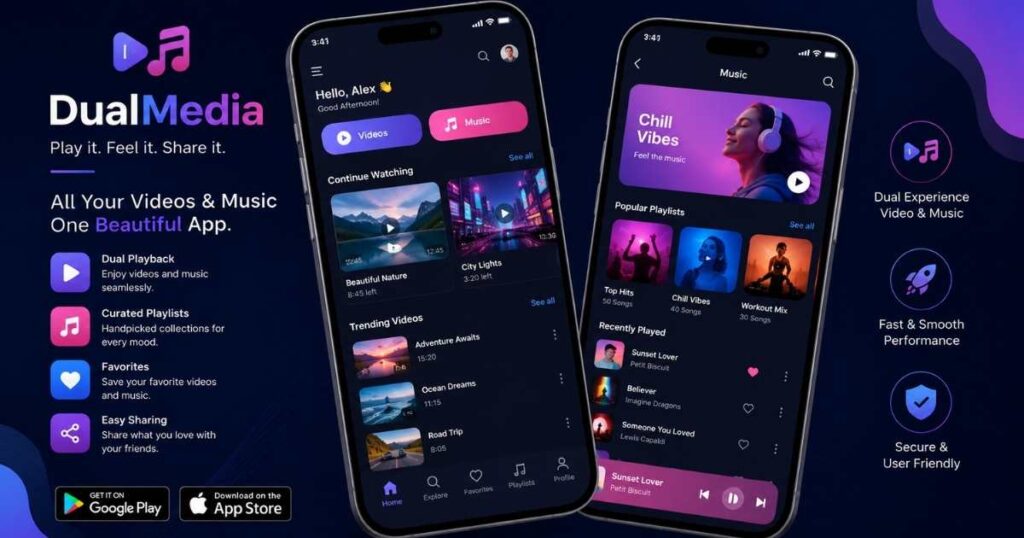
Application Mobile DualMedia refers to mobile applications designed to combine two or more media formats most commonly audio and video, but often text, images, and interactive elements too within a single, cohesive interface.
Instead of forcing someone to switch between a video app, a podcast app, and a messaging app, a DualMedia app lets them do all of it in one place. A user might watch a tutorial video while listening to narrated audio instructions, or follow along with live captions and clickable links layered over a livestream. The goal isn’t novelty for its own sake it’s reducing friction for both the people consuming content and the people creating it.
This kind of multimedia handling has quietly become the backbone of apps people already use every day, from streaming platforms to fitness trainers to short-form video tools.
Related POST: Pulsamento Secrets 2026: Hidden Rhythm Power Unlocked
How Do DualMedia Apps Work?
Behind the simple, smooth interface of a DualMedia app sits a fairly complex technical stack. Four building blocks make the experience possible.
1. Multi-Stream Media Handling
DualMedia apps need to manage several media streams at once video, audio, text, animations without one format slowing down or interrupting another. This requires efficient codecs, adaptive bitrate streaming, and careful resource management so the app doesn’t lag or drain the battery, even on mid-range devices.
2. Synchronization
Nothing breaks a DualMedia experience faster than a lag between audio and video. Precise synchronization keeps every media stream aligned in real time, which matters most in scenarios like live streams, video lectures, or guided workouts where even a half-second delay feels jarring.
3. Responsive User Interface
A good DualMedia app hides its complexity behind a clean, intuitive interface. Users should be able to switch between media modes, adjust playback settings, or toggle captions without breaking their flow. Interface design here is less about looking pretty and more about staying out of the user’s way.
4. Cloud Integration and Offline Access
Most DualMedia platforms lean on cloud infrastructure to store, stream, and sync content across devices. Many also support offline downloads, which matters for users in areas with patchy connectivity or anyone who wants to save data while traveling.
Key Features of DualMedia Apps
Several features consistently separate DualMedia apps from single-format alternatives.
1. Multi-Format Content Delivery
Audio, video, text, and interactive elements are delivered together rather than separately think a workout video paired with synced voice coaching, or a livestream with overlaid live chat.
2. Unified Publishing Systems
Creators can produce one piece of content with integrated audio and video, then publish it across multiple platforms from a single dashboard, without re-editing or re-uploading for each destination.
3. Real-Time Interaction
Live comments, polls, quizzes, and adjustable playback settings turn passive viewers into active participants, which is one of the biggest engagement drivers in modern apps.
4. Analytics and Monetization
Built-in dashboards show creators how their content performs watch time, engagement rate, audience retention while integrated monetization tools support subscriptions, ads, and paywalls without needing a third-party platform.
| Feature | What It Does | Example Use |
| Multi-format delivery | Combines media types in one stream | Workout video + audio cues |
| Unified publishing | Distributes content to multiple channels at once | One upload, several platforms |
| Real-time interaction | Adds live engagement layers | Live polls during a stream |
| Analytics & monetization | Tracks performance and revenue | Subscription + ad revenue dashboard |
Applications of DualMedia Apps
DualMedia technology isn’t theoretical it already powers some of the most-used apps on the planet.
1. Entertainment and Streaming
Platforms like YouTube, Netflix, and Spotify blend video, captions, interactive cards, and background audio to keep viewers engaged longer and give them more control over how they consume content.
2. E-Learning and Education
Apps such as Duolingo, Khan Academy, and Coursera pair video lessons with audio narration and supporting text, creating multi-sensory learning that improves retention and accessibility for different learning styles.
3. Fitness and Health
Peloton and Nike Training Club combine instructor-led video with real-time audio cues and performance data, turning a simple workout video into a guided, interactive coaching session.
4. Social Media and Content Creation
TikTok, Instagram, and Snapchat depend heavily on multi-format tools letting creators layer music, voiceovers, captions, and effects onto video clips in a single editing pass.
Benefits of DualMedia Applications
1. Enhanced User Engagement
Layered, interactive content keeps people in the app longer. Live comments, real-time polls, and switchable media modes encourage active participation instead of passive scrolling.
2. Streamlined Workflows for Creators
One app replaces several. Creators can produce, edit, and publish content without juggling separate tools for video, audio, and distribution.
3. Greater Accessibility
Captions, audio descriptions, and adjustable playback speeds make DualMedia apps more usable for people with disabilities and anyone who simply prefers a different format.
4. Multi-Platform Support
Most DualMedia apps are built with cross-platform frameworks, so the experience stays consistent whether someone is on a phone, tablet, or desktop browser.
Challenges of DualMedia Apps
Multi-format media integration isn’t free of trade-offs.
1. Technical Complexity
Getting multiple media types to work together smoothly without sync issues or crashes takes advanced engineering and ongoing optimization, which raises development time and cost.
2. Performance Limitations
Running video and audio simultaneously is resource-intensive. Older or budget devices can struggle, leading to stutter, overheating, or shortened battery life.
3. Data Consumption
Streaming layered media formats at once eats through mobile data quickly, which is a real concern for users on limited or slower connections. Developers have to balance quality against bandwidth efficiency.
The Future of DualMedia Apps
The next phase of DualMedia development is likely to lean heavily on artificial intelligence for automatic synchronization and smarter, more personalized content recommendations. Augmented reality and virtual reality are also expected to play a bigger role, layering immersive visual elements on top of existing audio-video experiences. As 5G connectivity becomes more widespread, the performance and data-consumption hurdles that currently limit DualMedia apps should ease considerably, opening the door to richer, more responsive multi-format experiences across nearly every industry.
FAQs
What does DualMedia mean in a mobile app?
It means the app can handle and synchronize two or more media formats typically audio and video within one interface, instead of requiring separate apps for each format.
Is DualMedia the same as a regular streaming app?
Not quite. Streaming apps usually focus on one media type, while DualMedia apps combine several formats with real-time interaction and synchronization built in.
Why do DualMedia apps use more data than regular apps?
Because they stream multiple media layers simultaneously, such as video, audio, and live interactive elements, which together require more bandwidth than a single format alone.
Are DualMedia apps good for accessibility?
Yes. Features like captions, audio descriptions, and adjustable playback make content easier to access for users with different needs or preferences.
Conclusion
Application Mobile DualMedia represents a meaningful shift in how mobile apps are designed and used. By combining audio, video, text, and interactive elements into one synchronized experience, these apps cut down on the friction of switching between tools, while giving creators a single, efficient platform to produce and distribute content. From streaming and education to fitness and social media, the use cases keep multiplying because the underlying idea is simple: people want richer experiences without extra effort.
That said, DualMedia apps aren’t without hurdles. Technical complexity, performance limits on older devices, and heavier data consumption remain real challenges for developers to manage. Even so, as AI, 5G, and cloud technology continue to mature, those barriers are likely to shrink. For businesses, educators, and content creators looking to stay competitive, understanding and adopting DualMedia principles isn’t just a trend to watch it’s quickly becoming the standard for what a modern mobile app should be.

Jack Edward is the founder and author of TechCrase (techcrase.com), a technology-focused blog dedicated to sharing the latest tech news, digital trends, gadget insights, and practical how-to guides. With a passion for innovation and emerging technologies, he simplifies complex topics to help readers stay informed and make smarter tech decisions in the digital world.