
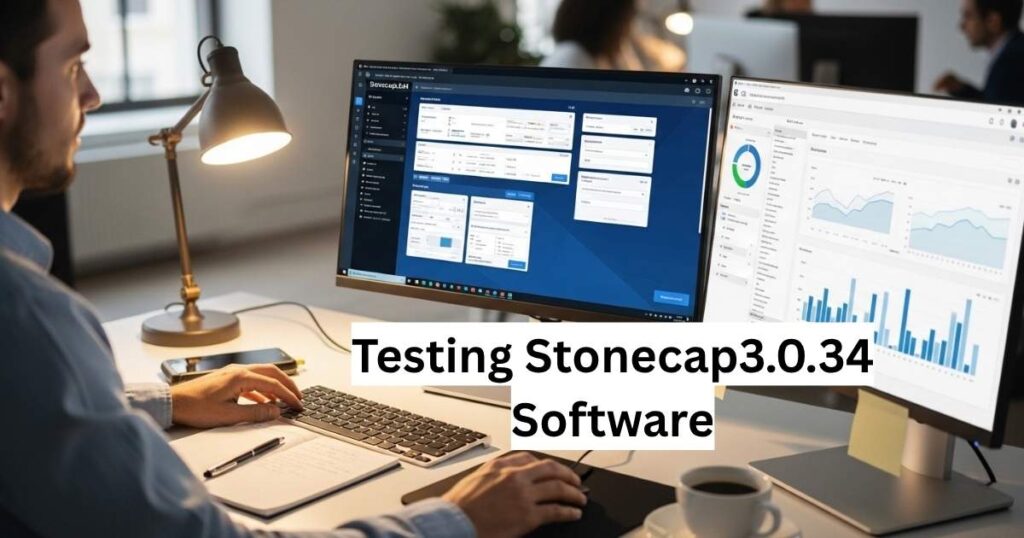
Software testing isn glamorous. But it’s the difference between a product your users love and one they abandon after five minutes. Testing Stonecap3.0.34 software has become a go-to solution for QA teams across the USA who need reliable, structured results without the headache. Whether you’re catching bugs early or validating performance under pressure, this tool handles it.
Here’s the thing most guides won’t tell you. Setup matters more than the testing itself. Get your environment wrong and your results mean nothing. This guide walks you through everything: installation, test environment setup, methodologies, reporting, and the advanced tricks that separate good testers from great ones. You don’t need years of experience to follow along. You just need the right information. Let’s get into it.
What is Testing StoneCap3.0.34 Software?
Think of testing Stonecap3.0.34 software like a pre-flight checklist. You wouldn’t board a plane that skipped its safety inspection so why deploy software that hasn’t been properly validated? The software testing process exists for exactly this reason: to catch problems before real users do.
At its core, this is about software reliability. The process evaluates functionality, stability, performance, and security across different environments. Teams that skip this step often pay for it later with crashes, data loss, and frustrated customers.
In 2026, quality assurance testing has become non-negotiable. With faster release cycles and higher user expectations, Stonecap3.0.34 gives QA teams the structure they need to test smarter not harder.
Related Post: New Updates GMRRmulator: Speed & Features Boost 2026
What You Will Learn in This Guide
This guide covers everything from environment setup to advanced performance tricks. Whether you’re a developer, QA engineer, or IT manager, you’ll walk away with a clear, actionable roadmap.
By the end, you’ll understand how to run test execution cycles efficiently, identify defects early, and generate reports that actually mean something. No fluff. Just real, practical knowledge you can use today.
Here’s what’s covered:
- Setting up your test environment setup correctly
- Choosing the right automated testing tools
- Running functional testing, performance testing, and more
- Tracking metrics and analyzing results
- Avoiding the mistakes most teams make
Key Features of StoneCap3.0.34 Software
Before you start testing, you need to know your tool inside out. Stonecap3.0.34 packs serious features into a clean interface. It’s built for teams that care about software quality validation and don’t want to waste time on clunky workflows.
The platform supports automated testing tools, real-time dashboards, and multi-format report exports. It also integrates directly with CI/CD pipeline integration systems, which means your testing fits right into your existing development flow without friction.
What really sets it apart is its cross-environment compatibility. Whether you’re running cross-platform testing on Windows, macOS, Linux, or cloud environments, Stonecap3.0.34 handles it with consistency.
Core Functionalities
| Feature | What It Does |
| Automated Reporting | Exports results in HTML, CSV, and PDF |
| Defect Tracking | Logs and categorizes bugs in real time |
| Performance Dashboards | Monitors CPU, RAM, throughput, and latency |
| CI/CD Integration | Plugs into Jenkins, GitHub Actions, and more |
| Cross-Platform Support | Tests across OS, browsers, and devices |
Unique Selling Points
Three things make Stonecap3.0.34 stand out. First, workflow optimization is built in, not bolted on. Second, process automation reduces manual effort significantly. Third, its visual dashboards make test results analysis accessible to everyone on the team, including non-technical stakeholders.
Preparing for StoneCap3.0.34 Software Testing
Skipping prep is like building a house without a blueprint. It never ends well. Before you run a single test, you need to verify your system, install the software correctly, and back everything up. These three steps prevent 90% of the headaches teams encounter later.
Software stability and reliability starts before the first test runs. A poorly configured environment produces unreliable results and wastes everyone’s time. Getting the foundation right is the smartest investment you’ll make in this process.
Verify System Requirements
Check these minimum specs before installation:
- OS: Windows 10/11, macOS 12+, Ubuntu 20.04+
- RAM: 8GB minimum, 16GB recommended
- CPU: Quad-core 2.5GHz or faster
- Storage: 10GB free space minimum
- Network: Stable broadband connection
Install the Software Correctly
Follow these steps carefully:
- Download the installer from the official source
- Verify the checksum before running
- Launch the installation wizard with admin rights
- Apply all available software updates immediately
- Restart the system before beginning any testing
Backup Existing Data
Always back up before you begin. One corrupted test run can wipe configuration data you spent hours building. Use a reliable backup tool and store copies in at least two locations, one local and one cloud-based. It takes ten minutes and can save you days of recovery work.
Setting Up the Testing Environment
Your test environment is either your greatest asset or your biggest liability. A well-configured environment produces clean, repeatable results. A sloppy one introduces variables that make your data meaningless.
Choose between VM emulation, container-based environments, or native setups depending on your testing goals. For compatibility testing, VM emulation lets you simulate dozens of OS configurations without needing separate physical machines. Containers work brilliantly for parallel run simulations where speed matters.
Hardware & Software Requirements
| Component | Minimum | Recommended |
| RAM | 8GB | 16GB |
| CPU | Quad-core | Octa-core |
| Storage | 10GB | 50GB SSD |
| OS | Windows 10 | Windows 11 / Ubuntu 22 |
| Network | 10 Mbps | 100 Mbps |
Recommended Tools & Plugins
Pair Stonecap3.0.34 with these tools for best results:
- Selenium for browser automation
- JMeter for load and stress testing
- Postman for API validation
- Docker for container environment setup
- Grafana for performance logs monitoring
Testing Methodologies for StoneCap3.0.34
Not all testing is equal. Methodology is everything. Stonecap3.0.34 supports five core testing types, and smart teams use all of them strategically rather than defaulting to just one.
Each methodology targets a different failure point. Together they give you complete coverage across functionality, speed, security, compatibility, and user experience. Think of it like a medical checkup: you wouldn’t skip the bloodwork just because the patient looks healthy.
Functional Testing
Functional testing checks whether the software does what it’s supposed to do. You define expected outputs for specific inputs and verify the system delivers them every time. Stonecap3.0.34 makes this straightforward with structured test case templates.
Run functional tests after every major code change. This catches defect detection issues early before they compound into bigger problems downstream.
Performance Testing
Software performance testing measures how the system behaves under load. Key metrics include:
- CPU usage analysis under stress conditions
- RAM usage tracking during peak operations
- Throughput rates across concurrent users
- Latency margins under heavy data loads
“Performance testing isn’t about finding the breaking point. It’s about understanding the system’s behavior before users discover the limits themselves.”
Compatibility Testing
Cross-platform testing ensures consistent behavior across operating systems, browsers, and devices. Don’t assume what works on Chrome works on Safari. Test every major environment your users actually use.
Security Testing
Security isn’t optional in 2026. Test for encryption strength, authentication vulnerabilities, and data exposure risks. Reference OWASP Testing Guide for a proven framework your team can follow.
Usability Testing
Does the interface make sense to a real person? Usability testing answers that question. Bring in actual users, observe their behavior, and note where they hesitate or get confused. Those friction points are your next improvement targets.
Streamlined Test Management
Disorganized testing isn’t testing. It’s guessing. Test case management gives your team structure, accountability, and repeatable processes that scale as your project grows.
Stonecap3.0.34’s built-in management tools let you categorize test cases by feature, priority, and environment. Automated tagging speeds up sorting and reduces human error significantly.
Organizing Test Cases
Structure every test case with these fields:
- Test ID for tracking
- Feature area being tested
- Input conditions and expected output
- Priority level (critical, high, medium, low)
- Environment where it runs
Scheduling and Tracking
Align your test schedule with sprint cycles. Track pass/fail rates daily and flag anything below your agreed threshold immediately. Waiting until the end of a sprint to review results is a costly mistake most teams make exactly once.
Reporting That Actually Helps
A report nobody reads is just noise. Stonecap3.0.34’s reporting tools generate clean, actionable outputs that stakeholders actually engage with.
Test results analysis works best when you combine raw numbers with visual context. Charts, trend lines, and color-coded dashboards communicate problems instantly without requiring the reader to dig through spreadsheets.
Metrics to Track
| Metric | Why It Matters | Ideal Range |
| Pass/Fail Rate | Overall test health | 95%+ pass rate |
| Defect Density | Code quality indicator | Less than 1 per module |
| CPU Usage | Performance baseline | Below 70% under load |
| Latency | User experience impact | Under 200ms |
| RAM Usage | Resource efficiency | Below 80% capacity |
Visual Reports and Dashboards
Export reports in HTML for sharing, CSV for data analysis, and PDF for executive summaries. Customize dashboards by stakeholder role so developers see defect details while managers see trend summaries.
Common Issues and How to Fix Them
Every tester hits a wall. Here’s how to break through it fast.
Installation Problems
| Problem | Fix |
| Admin rights error | Run installer as administrator |
| Corrupted download | Re-download and verify checksum |
| Version conflict | Uninstall previous version first |
Software Bugs & Glitches
Document every bug with a screenshot, environment details, and reproduction steps. Reproduce it three times before logging it officially. Use defect identification techniques to categorize severity and assign priority before escalating.
Compatibility Issues
Run cross-platform testing in isolated VM environments. Use Docker containers to replicate exact user environments and pinpoint whether the issue is OS-specific, browser-specific, or hardware-related.
Real-World Use Cases
Case Study Examples
E-commerce Platform: A mid-sized US retailer used Stonecap3.0.34 to run user acceptance testing before a major checkout redesign. They caught 14 critical bugs before launch and reduced post-release support tickets by 60%.
Healthcare IT: A clinic network used security testing features to validate HIPAA compliance across three integrated systems. The result was a clean audit and zero compliance violations.
Industry Applications
| Industry | Primary Testing Need | Stonecap3.0.34 Benefit |
| E-commerce | Load and performance | Handles high traffic simulation |
| Healthcare | Security and compliance | Validates encryption and access controls |
| Fintech | Functional and security | Catches transaction errors early |
| IoT | Compatibility | Tests across dozens of device types |
Conclusion
Testing Stonecap3.0.34 software isn’t complicated. It just takes the right approach, the right tools, and the discipline to follow through on every step. Start with a solid environment, pick your methodologies intentionally, track the metrics that matter, and let the data guide your decisions.
The teams winning in 2026 aren’t the ones testing more. They’re the ones testing smarter. Start with one methodology today, build from there, and you’ll have a QA process that actually protects your product and your users

Jack Edward is the founder and author of TechCrase (techcrase.com), a technology-focused blog dedicated to sharing the latest tech news, digital trends, gadget insights, and practical how-to guides. With a passion for innovation and emerging technologies, he simplifies complex topics to help readers stay informed and make smarter tech decisions in the digital world.